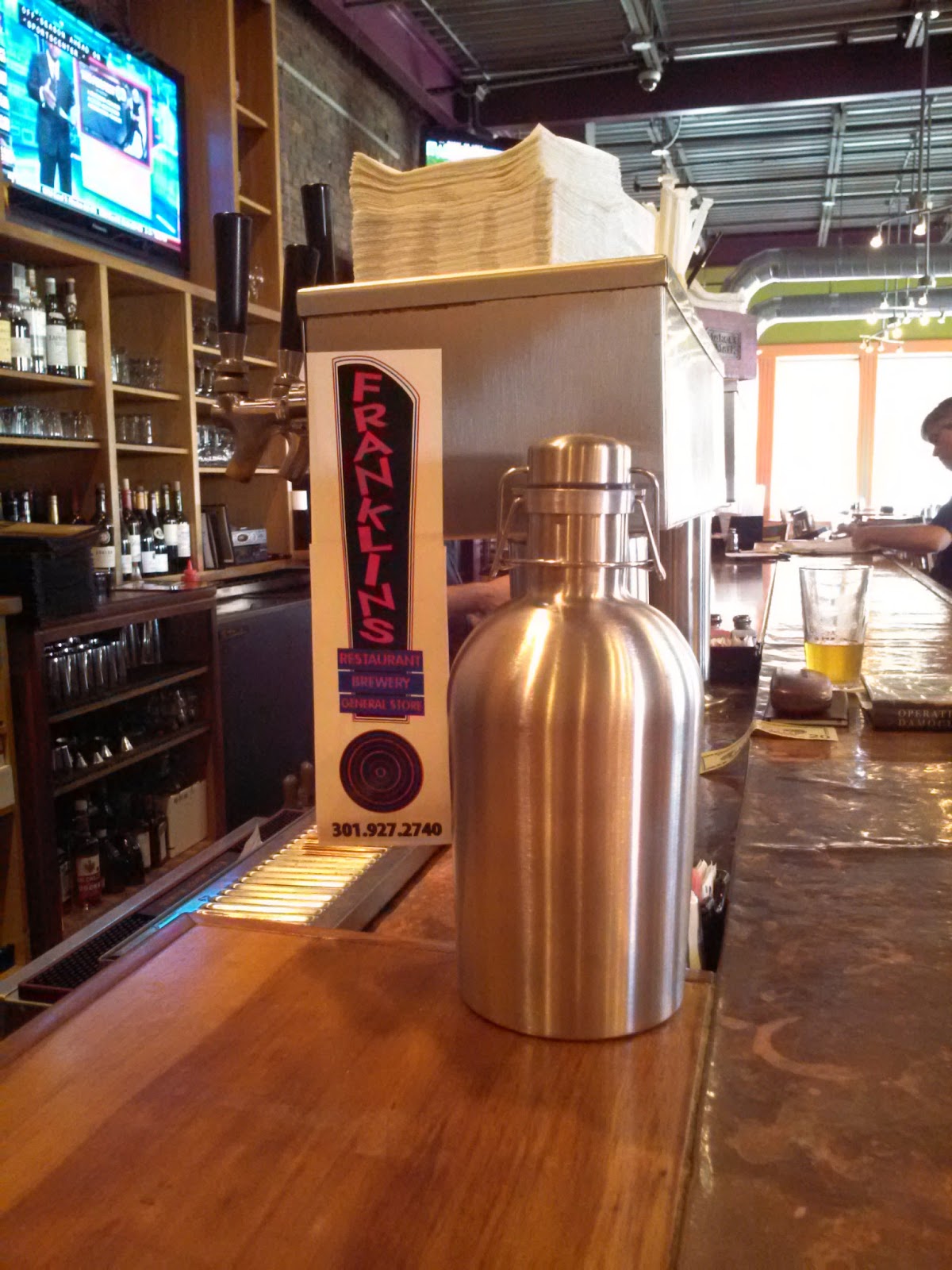
Franklin's Brewery

Sunday, October 30, 2011

Vanilla Bean Stout

My first trip to the Great American Beer Festival was back in 2002 as a representative of Martha's Exchange Restaurant & Brewing Company of Nashua, New Hampshire. My friend and former co-worker Greg Ouellette was celebrating his first year as brewer at Martha's with a trip to the mile high beer festival. Greg's most popular beer at the festival was by far his Velvet Elvis, a vanilla bean stout. Its a seasonal favorite for stout lovers at Martha's ever since. Now almost a decade later I found myself taking a shot at such a beer here at Franklin's.

In order to handle the vanilla bean flavor without it overpowering the beer the grist bill was loaded up with Maris Otter pale malt, crystal malts, oats, and the trio combination of chocolate malt, black patent malt and roasted barley. To insure there would be a nice residual sweetness in this beer lactose sugar was added to the boil. For a mellow bittering hop addition we stuck with English Fuggles and fermented with our house English yeast strain. This stout finished out with a rich malt body, creamy mouth feel, with notes chocolate and roasted goodness.

After fermentation was finished Madagascar Bourbon Vanilla Beans were split,cut and steeped in the beer. After a couple weeks the combination of the stout with the beans produced a very pleasing combination of aromatic vanilla and chocolate decadence. We've tapped this on our nitro line for a rich,creamy indulgent dessert in a glass. Enjoy!

Tuesday, October 11, 2011

Ludicrous

There's been a lot of interest in this beer since we tapped it,including a lot of questions from home brewers, so here we go. This project has been years in the making since I can recall having my first ever sour mash beer, Spuyten Duyvel, a Flemish-style red ale from the Seven Barrel Brewery in West Lebanon, New Hampshire ( at the time the sister brewery of Vermont Pub & Brewery in Burlington, Vermont) way back in 2001 . I believe the beer originated at VPB with Greg Noonan (R.I.P. )& his crew and made its way to 7B, as the long time brewer there Paul White( R.I.P.) once mentioned to me " I hate that fucking beer, Greg makes me brew it". Paul was always one to tell it like it is and his statement about the Duyvel could never be more true that some beers are extremely polarizing, even to brewers.

So why has it taken me a decade to make an attempt such a procedure? Well, the situation was never right to try it. In my mind two things would need to come together for this to happen, 1) the proper brewing facility and 2) an owner who would give me carte blanche to try such a crazy endeavor. So now 10 years later equipped with a mash tun that has not only the ability to seal and hold pressure but can also sustain temperature due to its own heating jacket I was off to the races.

One small piece of equipment was eluding me however, an Argon regulator. You read that right,Argon and its not typically found in a brewer's tool box so even after many attempts at reaching out to brewers near and far to borrow one, contacting tool rental companies and even the company that was going to rent me the tank of gas I had nothing. Finally I was able to locate a equipment supplier locally who had one for sale so one small investment latter I had a new tool for my box.

Brew day was actually split into two days, day one consisted of mashing in a grist consisting of Pilsner, Rye and Munich malts into the mash tun and holding it at 147 F for 90 minutes. Then the mash was recirculated and run off into the brew kettle. After the spent grain was removed, the mash tun was rinsed out of as much remaining debris as possible. Then using the heat exchanger the wort was pumped back into the mash tun from the kettle bringing the temperature down to just above 120 F. Fresh pilsner malt was then milled into the mash tun to inoculate the wort with the naturally occurring lactobacillus that is present on the surface of the grain. The heating jacket on the mash tun was then set to 120 F in attempt to keep Acetobacter ( a bacteria that will convert ethanol into acetic acid in the presence of oxygen ) out of the wort otherwise we'd be producing vinegar. To aid in the anaerobic aspect of this process we used Argon gas to flood the mash tun and keep oxygen out of the wort. Then we waited...

After two days and a significant PH drop in the wort we returned to the brew house and ran the wort from the mash tun into the kettle,boiled and processed it as any other normal beer. Repitching our house Saison yeast and allowing the fermentation to free climb. The temperature reached the upper 80s and the resulting combination of an acidified wort and high fermentation saison yeast fermentation was nothing short of amazing.

I've never encountered in beer what I was smelling and tasting in the days after fermentation. Never in beer is what I said, and that's because what I was encountering was that of a young white wine. Reminiscent of young Chenin Blanc in appearance as well as aroma and flavor, it was remarkable. The unique aspect was a sharp note of citrus, very much like freshly squeezed grapefruit juice lingering in the background.

As this beer has aged the sour character has smoothed out and the wine character is a little more subtle, as is the grapefruit. All in all this was a fun project and the results were delicious. Look for more sour mash beers to come.

Saturday, July 30, 2011

Sorachi Samurai

After the success of our Nelson Ha Ha this past year I thought about doing another pale ale to showcase a unique hop variety. This time it was Sorachi Ace hops which originated from Japan and our now available to the US market. Straight forward and simple as it gets this recipe is simply 2-row barley malt,some Millenium hops for bittering and Sorachi in the late stages of the kettle as well as the dry hop. Summer is the also the best time for this pale ale as Sorachi Ace hops showcase a fragrant lemon citrus zest that I hop you find very refreshing.
(Hattori Hanzō sword not included)

Saison '11

If you asked 100 different people their definition of Jazz or Barbecue you'd get 100 different opinions.

In the world of beer, Jazz is otherwise known as Saison.

I can never truly say enough about Saison as its not only the most interesting beer style but also one of my favorites. Its the one style of beer that's less about style and all about artist interpretation. While styles like Kolsch and Pilsner have little room for creativity and focus on execution of process, Saison is about executing the process of creativity. In a nutshell Saison can be whatever you want it to be...well within reason...though that could be argued as well.

At Franklin's I produced as Saison in the early fall of 2010 and now again in summer of 2011 with one concept in mind, to make the most complex beer possible out of the least amount of ingredients and process.

The players in this were 100% pilsner malt,Saaz hops,Belgian Saison yeast and of course the terrior of the brewing world, the local water supply. This combination of straight forward ingredients along with allowing the yeast to do something that if 99% of yeast strains in the world were allowed to do would produce detrimental results. The process or lack there of is a simple free climb in temperature with no cooling whatsoever. Normally when a yeast consumes sugar during fermentation one of the byproducts is heat. In a enclosed space like a fermenter the thermal mass can get quite warm and as a result if it isn't cooled (typically between 60-70ish degrees Fahrenheit) the yeast will produce off flavors in the beer that in essence contaminate it making it very unpleasant to drink.

The exception to this in the brewing world are Belgian Saison yeast strains, which researchers speculate might have derived from wine yeast strains which seem to perform well closer to blood temperature. So here on Baltimore Ave we allow the yeast to start fermenting and because we have turned off the controls to our glycol cooling jacket on our fermenter what results is a fermentation the build higher and higher temperatures each day. Typically I've seen the digital thermometers read as high as 88 degrees Fahrenheit and I've heard of other breweries hitting 95. Maybe next year we can turn off the AC in the building and see how high we can get the fermenter...just kidding.

This years version in my opinion is a much better example of what I'm shooting for as its substantially drier than last years version enabling the yeast and late hop additions to shine in the glass. I hope you can find the simply joy in a very straight foward exotic beer.

Mic Czech

Pils, glorious pils. Since its inception in the Czech Republic in 1842 this beer has been brewed and changed the world of beer like no other style. It has inspired many great Pilsner beers since and many not so great, regardless it has produced along with its red headed step child offspring the number one style of beer consumed in the world today.

In Mic Czech we pay homage to the original, Plzeňský Prazdroj, better known world wide by its German name Pilsner Urquell. Our Bohemian style pilsner is the result of a long and delicate handling process. Using high quality Bohemian Pilsner malt, Saaz hops and one of the world's oldest and most notable lager strains this beer was the result of seven weeks of patience. We think its worth it and hopefully you do to as you enjoy its light body packed with crisp malt and hop flavor.

Cruel Summer

The Washington D.C.'s metro area has an incredibly brutal summer season with blistering heat and humidity so fowl that even your sweat droplets have sweat droplets. To counter this I thought it would be a good idea to have a summer thirst quencher on our menu. Though marketed as an English pub ale on our menu, this recipe is nothing more than my take on English Ordinary Bitter.

That's right, "ordinary bitter"- its truely one of the awful style names that the world of beer has established and stuck to. First off these beers are not bitter,especially in the light of the modern appreciation for pale ales and I.P.A. and they can be far from ordinary when made right. Its been my experience that American beer drinkers don't take well to certain English monikers like bitter,mild or ordinary so....Cruel Summer it is.

Serving this beer via our nitro tap keeps this beer creamy and light in carbonation making it extremely quaffable since the alcohol is only 3.9%. An array of malted grains including a touch of wheat and British crystal malt help keep this beer light in body and give a touch of sweetness to balance the use of Fuggles and East Kent Goldings hops, two of the most traditional hops used in English brewing. Our house English yeast strain helps provide fruity esters to round out the beer making it a very refreshing bevergae because it's a cruel ... cruel ... cruel summer.

Brewmaster Flash and the Furious Five Hops

The Hippity Hoppity Series
Volume 6


Don't drink me cause I'm close to the edge
I'm trying not to lose my head,
It's like a hop jungle sometimes it makes me wonder
How I keep from going under

The sixth installment of our Hippity Hoppity Double I.P.A. series is a no nonsense straight forward hop experience. BMF has the simplest grist bill for a DIPA that we've brewed in a while coming straight at you with 2-row barley, carapils and Weyermann's new Carabelge malt. First wort hopped with Nugget and additionally again half way through the boil helped provide this beer with a solid aggressive bitterness from the start. Later additions of Columbus,Cascade and Amarillo made sure the hop character stayed with you till well after you swallowed. Not to be outdone by the surplus of kettle hops, this beer was then double dry hopped with Chinook,Centennial,Columbus,Cascade and Amarillo for a full out attack on your nose and the beer's finish.

From having watched people in this area take a simple dish and spice it up with Old Bay I think this beer was no different. A simple yet solid malt base with abundance of wrist flicked hop seasoning sprinkled throughout.